What Is a Bitcoin Sell-Off and What Should You Do When One Happens?
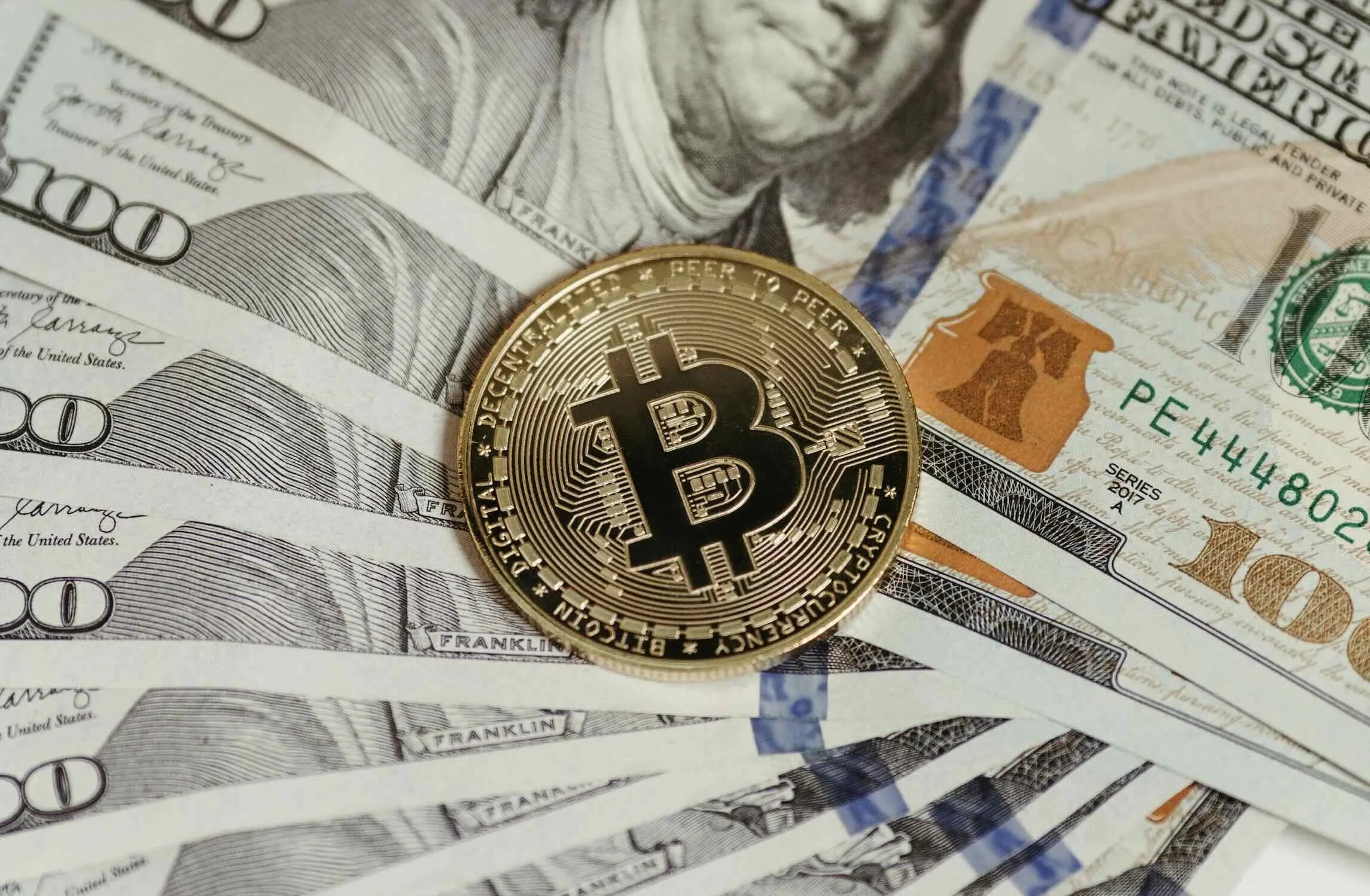
A Bitcoin sell-off is a rapid and significant decline in Bitcoin's price driven by a surge of selling activity. They happen regularly. Bitcoin has experienced sell-offs of 30%, 50%, and even 80% at various points in its history, and they consistently produce the same two reactions from unprepared investors: panic selling at the bottom, or paralysis that leads to the same outcome.
Understanding what causes a sell-off, how to read the data during one, and how to respond rationally is more valuable than any price prediction. This article covers all three.
What Causes a Bitcoin Sell-Off?
Not all sell-offs are the same. They differ in cause, severity, and duration, and understanding the cause helps you assess how to respond.
Whale distribution
Wallets holding large amounts of Bitcoin, commonly called whales, can drive significant price pressure when they sell. Unlike retail investors selling out of fear, whale distribution is typically calculated and strategic: profit-taking after a sustained rally, portfolio rebalancing, or pre-planned structured exits over weeks or months.
On-chain data tracks this behaviour through exchange net flows, the movement of Bitcoin from cold storage wallets to exchange hot wallets, which signals intent to sell. When exchange inflows from large wallets rise sharply, it often precedes selling pressure. In early 2026, on-chain analysis from Santiment identified a period where wallets holding between 10 and 10,000 Bitcoin sold over 81,000 BTC in eight days, a significant distribution event that preceded a notable price decline.
Macro events
Bitcoin increasingly correlates with broader risk asset markets, particularly during major macro events. Federal Reserve policy decisions, geopolitical developments, inflation data, and global liquidity conditions can all trigger sell-offs that have nothing to do with Bitcoin's own fundamentals. These sell-offs tend to be sharper and shorter than cycle-driven distributions.
Liquidation cascades
When leveraged long positions are liquidated, traders who borrowed money to buy Bitcoin are forced out of their positions by margin calls, which creates a cascade of selling that amplifies any initial price decline. Bitcoin broke below $90,000 in early 2026, triggering $302 million in crypto shorts liquidated as leveraged positions unwound. Liquidation cascades are often the mechanism that turns a routine correction into a sharp sell-off.
Retail capitulation
During extended sell-offs, retail investors, smaller holders who bought during a rally, often sell at a loss out of fear or financial necessity. This is called capitulation, and it frequently marks the late stages of a sell-off rather than the beginning. On-chain analysis tracks this through the Short-Term Holder Spent Output Profit Ratio (STH-SOPR) — when it consistently reads below 1.0, short-term holders are selling at a loss, which historically signals a market bottom is approaching rather than deepening.
How to Read On-Chain Data During a Sell-Off
You do not need to be a data analyst to use on-chain metrics effectively. A handful of publicly available indicators provide useful context during a sell-off.
| Metric | What It Measures | Bullish Signal | Bearish Signal |
|---|---|---|---|
| Exchange reserves | Bitcoin held on exchanges | Declining reserves | Rising reserves |
| Exchange net flows | Bitcoin moving to/from exchanges | Outflows (off exchange) | Inflows (onto exchange) |
| Long-term holder supply | BTC held by wallets >155 days | Increasing | Decreasing (distribution) |
| STH-SOPR | Short-term holder profit/loss | Below 1.0 (capitulation) | Above 1.0 (profit-taking) |
| MVRV Z-Score | Market vs realised value | Very low (undervalued) | Very high (overvalued) |
In April 2026, exchange reserves hit a seven-year low while long-term holders controlled 78.3% of total supply, signals that historically precede recoveries rather than further declines. These metrics are available on CryptoQuant and Glassnode.
What Should You Do During a Bitcoin Sell-Off?
The most important thing to do during a sell-off is nothing impulsive. The decisions that cost investors the most are made in the hours of a sharp decline, not in calm conditions.
Do not sell based on price alone.
A declining price is not itself a reason to sell. Bitcoin's entire history consists of sharp declines followed by recoveries to new highs. Investors who sold during the 2022 cycle lows at $16,000 would have needed to buy back above $95,000 in 2026 to recover their position. The question is not whether the price is down; it is whether your circumstances have changed in a way that requires you to act.
Revisit your original reasoning.
Why did you buy Bitcoin? If the reason was a long-term thesis about Bitcoin as a store of value or a tool for international transfers, a short-term price decline does not invalidate that thesis. If the reason no longer holds, that is a legitimate basis for reassessing your position.
Consider your actual liquidity needs.
If you need the money in the next three to six months, a sell-off is a useful reminder that Bitcoin is not an appropriate vehicle for short-term capital. If you do not need the money, the sell-off is noise, uncomfortable, but not actionable.
Ready to Send Bitcoin
Around the World?
Join thousands sending money home faster and cheaper with EvoMone. Buy bitcoin with your card and send it in minutes.
Dollar-cost averaging during a sell-off
For investors with a long-term view, a sell-off is an opportunity to buy more Bitcoin at a lower average cost. Continuing a regular DCA strategy through a decline, rather than stopping out of fear, has historically produced better outcomes than trying to time the bottom.
If you decide to sell
If your circumstances genuinely warrant selling during a sell-off, do it on a regulated platform with a transparent off-ramp. On EvoMone, tap Sell, select your amount and payout currency, and confirm. The proceeds go to your bank account through MoonPay's regulated infrastructure, with all fees shown before you confirm.
The Role of Self-Custody During a Sell-Off
One of the most stressful aspects of a sell-off for holders on custodial exchanges is not the price decline; it is the possibility that the exchange freezes withdrawals exactly when you want to act. Several exchanges have done this during periods of market stress, leaving users unable to sell, hold, or move their funds.
In a self-custody wallet like EvoMone, your Bitcoin is in a wallet you control. No platform decision can restrict your access to it during a sell-off. You can sell when you choose to, hold when you choose to, or send your Bitcoin internationally without any platform permission required. The decision is yours, made on your timeline, not on the exchange's.
Frequently Asked Questions
How long do Bitcoin sell-offs typically last?
It varies significantly by cause. Macro-driven sell-offs triggered by a single event can reverse within days. Cycle-driven distributions, where large holders sell systematically into a rally, can last weeks or months. The 2022 bear market saw Bitcoin decline from approximately $69,000 to $16,000 over roughly 12 months before recovering.
Should I buy more Bitcoin during a sell-off?
Only if your financial situation allows it and you have a long-term view. Continuing a DCA strategy through a decline is a defensible approach for long-term holders. Buying a large lump sum at what you believe is the bottom is harder to execute well and carries more risk. Never use borrowed money to buy during a sell-off.
What is whale selling, and how does it affect the price?
Whale selling refers to large Bitcoin holders' wallets holding hundreds or thousands of Bitcoin moving their funds to exchanges and selling. Because of the volumes involved, whale selling creates significant downward price pressure. On-chain data tracks exchange net flows to identify when this is happening. Whale selling during a rally is typically profit-taking; whale selling during a decline can amplify the move.
How do I know if a sell-off is over?
There is no definitive signal, but a combination of factors historically associated with sell-off bottoms includes: STH-SOPR consistently below 1.0 (short-term holders selling at a loss), declining exchange reserves (Bitcoin moving off exchanges), long-term holders accumulating, and the MVRV Z-Score reaching historically low levels. None of these is a guarantee; they are probabilistic signals, not certainties.
The Bottom Line
Bitcoin sell-offs are a regular feature of the market, not an anomaly. They trigger poor decisions from investors who respond to price rather than to their own circumstances. The investors who navigate sell-offs best are those with a clear original thesis, no immediate need for the capital, and a self-custody wallet that gives them control regardless of what the market is doing.
EvoMone keeps your Bitcoin in a self-custody wallet where it is accessible on your terms, not on the exchange's. Whether a sell-off requires you to act or simply to wait, the decision is yours to make.
Ready to Send Bitcoin
Around the World?
Join thousands sending money home faster and cheaper with EvoMone. Buy bitcoin with your card and send it in minutes.
Related Articles