Why Is Bitcoin Falling? 7 Key Factors Behind the Latest Price Drop
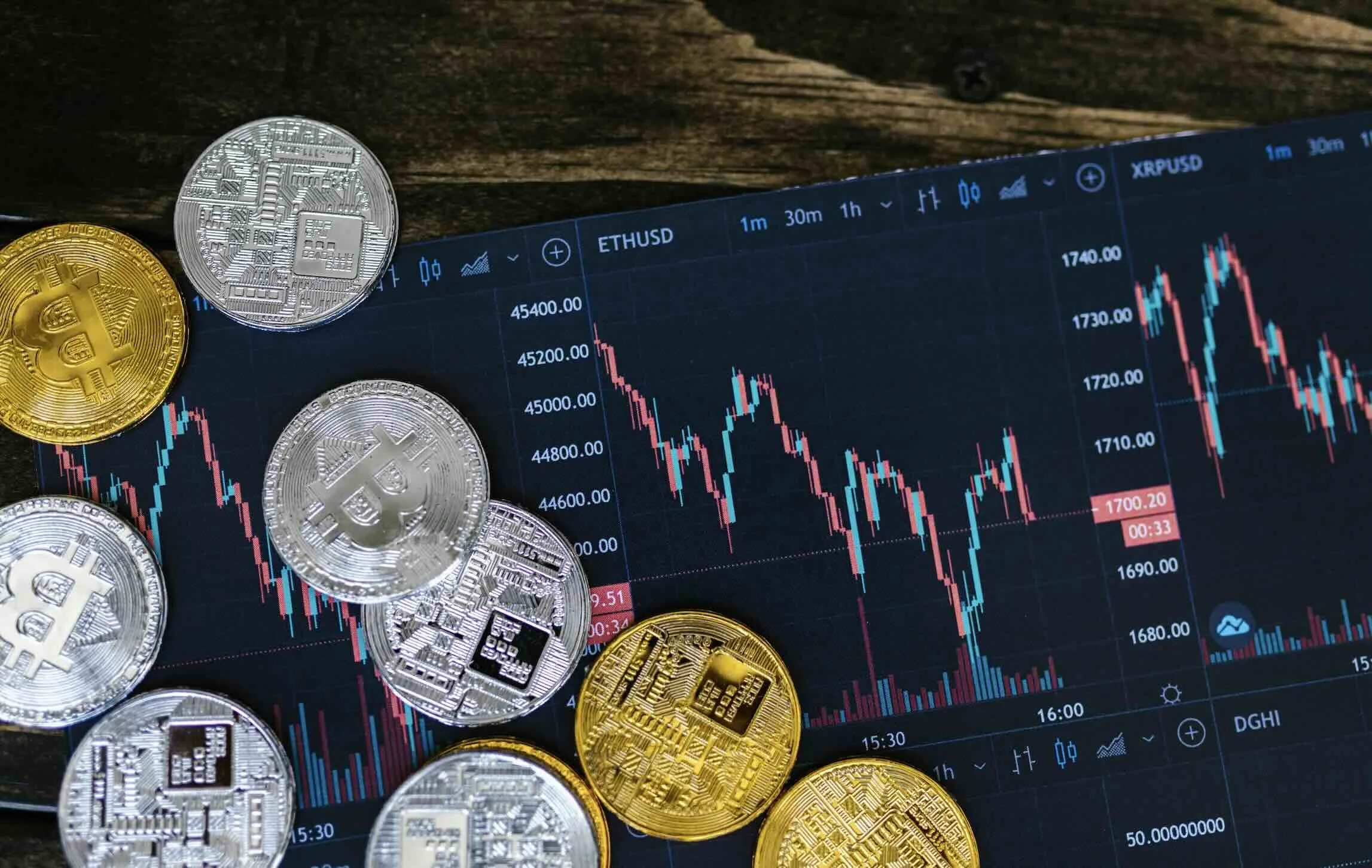
Bitcoin is trading around $65,000 as of June 2026, down more than 44% from its all-time high of approximately $126,000 set in October 2025. If you are watching your balance shrink and wondering why, you are not alone. And you are asking the right question.
The popular answer is that some news event caused it. A sale by a major holder. A geopolitical development. An ETF outflow. These things are real, and they matter in the short term. But they are rarely the whole story. The deeper answer, the one that actually helps you understand what is happening and make better decisions, has more to do with human psychology than with any single headline.
This article covers 7 key factors behind the current Bitcoin price drop, starting with the one that most people overlook.
Factor 1: Collective Human Psychology — The Real Price Driver
Bitcoin trades on a global open market, 24 hours a day, seven days a week, with no circuit breakers and no market closes. Every participant in that market, institutional fund managers, retail investors, long-term holders, short-term traders, brings their own emotions to every decision they make. Fear, greed, optimism, doubt, confidence, and uncertainty all show up in the price chart in real time.
Think of it this way. If five people in a room of one hundred suddenly ran for the exit, most people would stay calm and wonder what the fuss was about. If thirty people ran for the exit, panic would spread, and many others would follow, not because they had information, but because the behaviour of others triggered their own fear response.
Markets behave the same way. This is true of stocks, gold, oil, and Bitcoin. When enough people start selling, others follow, not always because their analysis supports it, but because panic is contagious. The Fear and Greed Index for crypto, which attempts to quantify this collective mood, registered extreme fear in late May 2026 as Bitcoin broke below $73,000. That sentiment, not any single piece of news, was the primary engine of the decline.
Understanding this does not make the drop less real. But it does change how you interpret it. The chart is not just a price line. It is a real-time display of collective human psychology, and human psychology has historically overshot in both directions before correcting.
Factor 2: Macroeconomic Pressure and the Risk-Off Environment
Bitcoin does not operate in isolation from the broader global economy. When investors become cautious, rising inflation, interest rate uncertainty, and geopolitical instability, they tend to move capital away from volatile assets and toward perceived safe havens. This is called risk-off sentiment, and it affects Bitcoin alongside equities and other risk assets.
In May and June 2026, several macro headwinds converged. A surge in global oil prices reignited inflation fears, pushing back expectations for central bank interest rate cuts. US CPI and PPI data came in higher than expected, adding pressure across risk markets. Geopolitical tensions, particularly around the US-Iran situation, increased demand for traditional safe havens like gold and government bonds, drawing capital away from crypto.
None of these developments had anything to do with Bitcoin specifically. But in a risk-off environment, Bitcoin gets sold alongside everything else that carries volatility. This is a feature of how institutional capital is managed, not a reflection of Bitcoin's underlying properties.
Factor 3: Leveraged Liquidations and the Cascade Effect
A significant portion of Bitcoin trading activity involves leverage, borrowed money used to amplify position size. When Bitcoin's price falls, traders with leveraged long positions are forced out of those positions by their exchanges, which automatically sell their holdings to cover the borrowed funds. This forced selling adds downward pressure on an already declining price, which triggers more liquidations, which creates more selling pressure. The result is a liquidation cascade.
In the current decline, Bitcoin breaking below $73,000 on May 28, 2026, triggered approximately $1 billion in crypto liquidations in total, with Bitcoin accounting for around $386 million. These were not investors making considered decisions to sell. They were automated systems executing forced exits. The speed and severity of the subsequent drop were amplified by this mechanical selling, not by any new fundamental development.
This pattern repeats in every significant Bitcoin correction. Understanding it helps explain why price drops often feel faster and sharper than the underlying news would justify, because they are being amplified by leverage, not driven by it.
Ready to Send Bitcoin
Around the World?
Join thousands sending money home faster and cheaper with EvoMone. Buy bitcoin with your card and send it in minutes.
Factor 4: Institutional ETF Outflows
The approval of spot Bitcoin ETFs in the US in early 2024 brought significant institutional capital into Bitcoin. These products allowed large investors, pension funds, endowments, and hedge funds to gain Bitcoin exposure without holding the asset directly. That inflow was a major driver of Bitcoin's rally to $126,000 in October 2025.
The flip side is that institutional capital is managed against benchmark returns and risk parameters. When macro conditions deteriorate or portfolio risk limits are hit, institutions reduce their Bitcoin ETF exposure. Three consecutive weeks of net ETF outflows in May and June 2026 contributed to the current decline, not because institutions have lost confidence in Bitcoin, but because risk management protocols triggered reductions across volatile assets.
ETF flows are now one of the most closely watched indicators in Bitcoin markets. Net outflows tend to precede or coincide with price weakness. Net inflows tend to precede or coincide with strength. They are not a cause of price movement so much as a reflection of the collective institutional mood, which brings us back to Factor 1.
Factor 5: Whale Behaviour and High-Profile Sell Events
Large Bitcoin holders, often called whales, can move markets when they sell. In late May 2026, two events drew particular attention. Strategy (formerly MicroStrategy), the largest corporate Bitcoin holder with over 843,000 BTC, sold 32 Bitcoin for approximately $2.5 million to fund preferred stock distributions. The amount was negligible, less than 0.004% of their holdings, but the symbolic significance was outsized. It was Strategy's first Bitcoin sale since 2022, breaking a long-standing accumulation streak that had become a confidence signal for the market.
The second factor was the ongoing Mt. Gox repayment process. The now-defunct exchange, which collapsed in 2014, has been distributing Bitcoin to creditors through a court-managed process. The extended deadline stands at October 31, 2026, meaning periodic news of distributions continues to weigh on sentiment even when the actual selling activity is limited.
Neither of these events fundamentally altered Bitcoin's supply or utility. But in a market driven by psychology, the perception of large holders selling creates fear that spreads through the market regardless of the actual scale.
Factor 6: Technical Support Levels and Market Structure
Technical analysis, the study of price patterns, support and resistance levels, and momentum indicators, influences Bitcoin markets because enough participants use it to make it self-fulfilling. When Bitcoin approaches a significant support level, traders who use technical analysis act on that level simultaneously, which creates the buying or selling pressure that makes the level significant.
In the current decline, Bitcoin breaking below $73,000 was technically significant, as it was a level that had held multiple times during the 2026 correction. Once it broke, the next major support zones of $70,000 and $65,000 became the focus. Bitcoin slipped below $70,000 in early June 2026, trading around $69,300 as leveraged positioning reached some of the highest levels of the current cycle. Analysts are now closely watching the $65,000 zone as the next key support area.
Technical levels do not cause price drops. They reflect where human participants have historically made decisions, and because those participants are watching the same levels, their collective behaviour at those points creates real price effects.
Factor 7: Bitcoin's Four-Year Cycle
Bitcoin has historically traded in approximately four-year cycles, loosely correlated with its halving events, the scheduled reductions in the rate at which new Bitcoin is created. Each cycle has involved a major rally to a new all-time high, followed by a significant correction, followed by a period of accumulation before the next cycle begins.
The current decline fits this pattern. Bitcoin reached an all-time high of approximately $126,000 in October 2025, the peak of the current cycle. A 40% to 60% drawdown from cycle peaks has been historically normal. The current 44% decline from that high puts Bitcoin in the range of what previous post-peak corrections have looked like. This does not mean the bottom is in, or that a recovery is imminent. But it provides useful context: this decline, painful as it is, is structurally consistent with how Bitcoin has behaved in every previous cycle.
The View Beyond the Price Chart
There is a perspective worth holding alongside everything above.
Most people see a Bitcoin price chart and think Bitcoin is rising or falling. There is another way to look at it: Bitcoin remains a fixed-supply, open network while the price chart reflects the changing purchasing power of the fiat currencies it is denominated in. From that view, what looks like Bitcoin volatility is partly a real-time display of collective human psychology around fiat currency.
"Perhaps the most important thing to remember is that Bitcoin's price is actually the least interesting thing about Bitcoin. What matters is what it enables. For the first time, billions of underbanked people can access a global financial network from a mobile phone. A freelancer in one country can be paid instantly by someone on the other side of the world, without needing permission from a bank or a financial institution. The real story is the growing number of people finding new ways to connect, transact and exchange value through an open global network."
Platforms like EvoMone are built on that idea, making it possible to send money globally as easily as sending a text message, regardless of what the price chart is doing on any given day. The infrastructure does not stop working when the price drops.
What Should You Do When Bitcoin Is Falling?
This article is not financial advice, and the right response depends entirely on your personal financial situation. But a few principles are worth keeping in mind.
• Understand why you originally bought Bitcoin. If the reason still holds, the current price movement does not change the thesis.
• Do not make decisions based on short-term price movements or social media sentiment. Both are amplified by the same psychology described above.
• If you need the money in the short term, that is a legitimate reason to consider selling, not because the price is down, but because Bitcoin is not an appropriate vehicle for short-term capital.
• If you are a long-term holder in a self-custody wallet, your Bitcoin is accessible on your terms regardless of what the market is doing. No exchange freeze, no withdrawal limit, no platform decision affects it.
For a more detailed framework on the sell-or-hold decision, see Should I Sell or Hold My Bitcoin? on the EvoMone blog.
Frequently Asked Questions
Is the current Bitcoin drop normal?
Yes. A 44% decline from a cycle high is within the historical range of Bitcoin corrections. Previous cycles saw drawdowns of 50% to 80% from their peaks before recovering to new highs. This does not guarantee the same will happen this cycle, but it provides context: large corrections are a recurring feature of Bitcoin's market history, not anomalies.
Will Bitcoin recover?
This article does not make price predictions. Bitcoin has recovered from every previous cycle correction to reach new highs, but past performance is not a guarantee of future results. Whether and when Bitcoin recovers depends on the same factors discussed above: macro conditions, institutional flows, sentiment, and cycle dynamics.
Should I buy more Bitcoin while the price is low?
That depends entirely on your financial situation, risk tolerance, and time horizon. Dollar-cost averaging, buying a fixed amount on a regular schedule regardless of price, is the most consistently recommended strategy for long-term Bitcoin holders who want to accumulate without trying to time the market. Only invest money you would be comfortable not accessing for an extended period.
Is my Bitcoin safe during a price drop?
If your Bitcoin is in a self-custody wallet, it is unaffected by price drops beyond the change in value. The Bitcoin itself is not at risk; only its current market value has changed. If your Bitcoin is on a custodial exchange, the price drop does not itself threaten your holdings, but periods of market stress have historically been when exchanges freeze withdrawals. Self-custody removes that risk.
How do I sell Bitcoin if I decide to?
On EvoMone, tap Sell in the app, enter the amount, select USD as your payout currency, and confirm. Proceeds go to your linked bank account through MoonPay's regulated off-ramp, with all fees shown before you confirm. Visit evomone.com/sell-bitcoin for the full process.
The Bottom Line
Bitcoin is falling because fear is contagious, leverage amplifies moves, institutions reduce risk in uncertain macro environments, and Bitcoin has historically corrected significantly after major cycle peaks. None of these factors is new, and none of them is permanent.
The price is the least interesting thing about Bitcoin. What matters is the network, the open, global infrastructure that allows anyone with a smartphone to send and receive money without a bank's permission. That infrastructure is working exactly as designed, whether Bitcoin is at $126,000 or $69,000.
Ready to Send Bitcoin
Around the World?
Join thousands sending money home faster and cheaper with EvoMone. Buy bitcoin with your card and send it in minutes.
Related Articles